


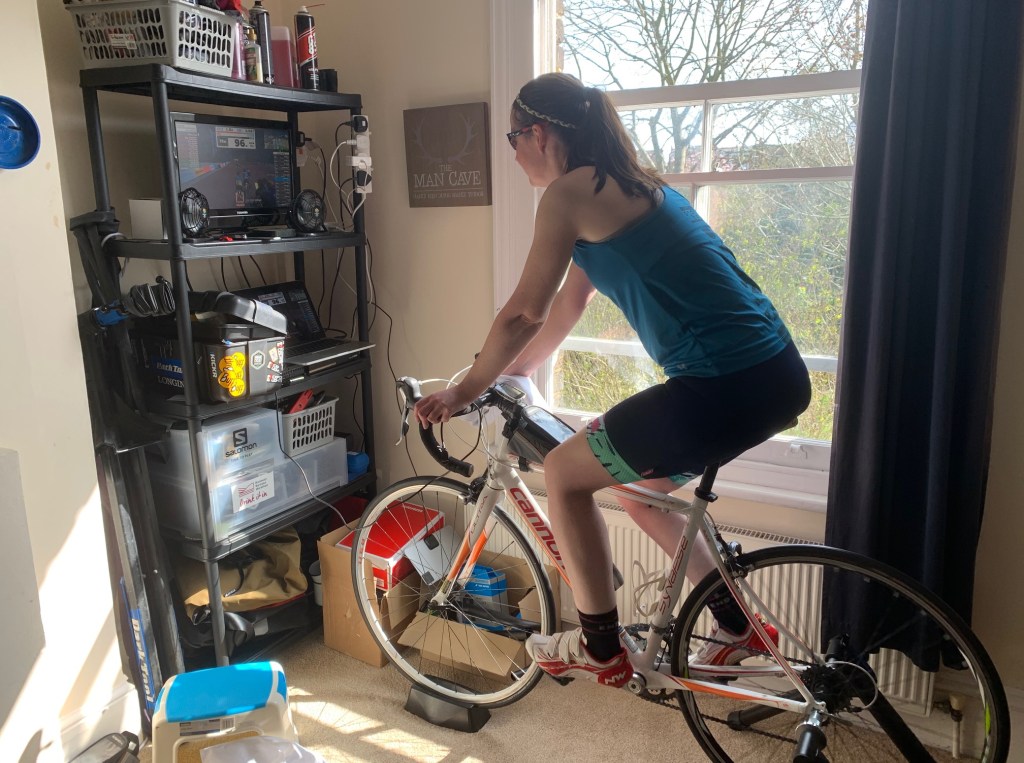
Over the last seven weeks I set myself a challenge to improve my cycling – I had two big cycling events in the calendar for later in the year which were part of my 2020 challenges. With lockdown restrictions in place I, like many, took to Zwift and seized the opportunity to work on my cycling fitness and power.
I used the Zwift six-week FTP builder training programme and thought I would share my thoughts on the programme.
When I started the programme, I planned to ride the 160km Ride London in August, and a 130km sportive from Vancouver to Whistler in September. One of my ultra runs has also been rearranged to September so despite a high chance that all of this would change, it was something to focus on.
What is the programme
Zwift has a number of built-in training programmes that you can follow, with different objectives and time commitments. This one is 4-5 sessions a week, with each session 60-90 minutes and the aim is to increase your power output.
What is FTP and why is it useful
FTP stands for ‘Functional Threshold Power’ and simply put, it is the average number of watts that a rider can consistently sustain over an hour. The most common way to test this involves going all out for 20 minutes and then taking 95% of your average watts – Zwift helpfully can do all of this for you.
It is useful for two things:
- To be able to set effective workouts based on hitting different % of your FTP at intervals
- To track your own improvement over time
Personally, I’m not that fussed on what the number is or how it compares to others – I was more interested in using it as a tangible measure of where I was, how much I had improved and to add some structure to my training.
Fitting the plan around my other training
Training for ultra-endurance events is time consuming and I wanted my cycling to sit alongside my running. My average week would look something like this:
- 4-5 cycle sessions (2 moderate, 2 hard and an optional recovery ride)
- 4 runs (around 45 – 65km a week)
- 2 strength sessions
Fitting in 10-11 sessions a week in total often meant that I was doing the cycle sessions on tired legs, which whilst good for my end goal of increased fitness and endurance was less good for hitting all the workout splits. I think if you take on a programme like this it’s good to be clear on what your overall goal is as it can stop you getting too disheartened when you can’t complete a specific split in a workout.
How was the plan
The plan gives you the workouts each week with a window of a few days each time to get them done. The plan structure starts on a Monday and you can’t change this – I found this slightly frustrating as the hardest session was always Fri – Sun, which didn’t work that well with the rest of my training / life; do bear that in mind if you take on one of their plans.
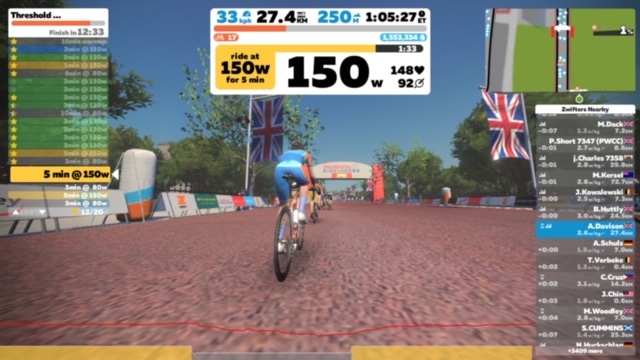
I sailed through the first two weeks without any problems until reality hit in the middle two weeks, I found the threshold workouts impossible and found myself unable to complete two of them in full. I felt a bit disheartened but persevered, until I had some kind of epiphany in the last two weeks where I suddenly found things much easier and could sail through intervals I couldn’t do only a week prior. This was a great feeling and made the tough days totally worth it.
I did swap or skip some of my sessions; I’m a big believer in not being a slave to a plan at the expense of missing things that you want to do; sometimes I would swap a session to do a virtual meet-up with friends or to ride outside with my husband – I tried to swap out the easier sessions and keep the hard ones in the plan.
Did it work?
Over the course of the six weeks I completed 20 workouts, totalling over 20 hours and covered more than 530km (plus the additional hours I rode in meet ups or outside). I did a FTP test at the start and the end – I gained 30 points between the two. Both my Strava and Garmin data is also showing a decent uptick in my overall fitness levels over the same period. I’m calling that a success and I definitely feel that this has been beneficial as part of my base building towards the longer endurance events. As someone who also has to be very cautious around running mileage increase due to previous injury, this felt like a really good way to increase my training without increasing impact.

I think if you like a bit of a structure then a Zwift programme is for you and I’m glad I took this one on. However, I would also say don’t be afraid to swap things around and be a bit flexible with it – don’t miss riding outdoors or getting involved in other fun things just because your session plan is going to disappear in the next 24 hours.
What next?
I won’t be jumping straight into another plan but I will be doing some of the key workouts within my training over the next few months and putting what I have learned about the sessions into good use. I’m also taking on a 300km running challenge in June so will back off the cycling intensity just a little to fit that in.
If you are not ready to commit to a programme I would definitely recommend trying some of the individual workouts – they are great fun.
My two cycle events have sadly now been cancelled. I still plan to ride the Vancouver to Whistler event in 2021 but the future of Ride London is looking very uncertain. However, I don’t believe this training is wasted at all – my overall fitness has improved, my running endurance has improved and I really enjoyed focusing on a specific area of improvement – I feel super proud of achieving something I could both feel and see as data. In the meantime, once national travel / staycation restrictions are eased in the UK later in the year I hope to get that 100-miler done with my husband somewhere in the UK by ourselves – watch this space!




 Mrs Davison: Project 39